
Vessel sinks are a popular choice for modern bathroom designs, offering a stylish, above-counter installation that adds elegance and functionality.
However, with various sizes and styles available, choosing the best vessel sink size for your bathroom is important.
Table of Contents
This guide will help you understand the different vessel sink sizes and determine the best option for your space and needs.
What is a Vessel Sink?
A vessel sink is a type of sink that sits on top of a countertop or vanity rather than being recessed into the counter.
These sinks can be made from a variety of materials, including ceramic, glass, stone, and metal, and come in a wide range of shapes, from round to rectangular to unique, artistic designs.
The height and visual impact of vessel sinks make them a bold design statement in many bathrooms.
What Is the Best Vessel Sink Size?
For most bathrooms, a vessel sink measuring approximately 16 to 20 inches wide and 13 to 16 inches deep offers a good balance between appearance and functionality.
A typical vessel sink is around 4 to 7 inches high, although some models are shallower or considerably deeper.
Here is a general size guide:
Vessel Sink Size | Best For | Space Requirement |
|---|---|---|
12–15 inches | Small bathrooms and powder rooms | Very compact |
16–18 inches | Standard bathroom vanities | Compact to moderate |
19–21 inches | Larger bathrooms | Moderate |
22+ inches | Large vanities and spacious bathrooms | Requires more countertop space |
The dimensions aren’t the only consideration. The sink’s height also affects the final countertop height, which can significantly influence comfort.
How to Choose the Right Vessel Sink Size
1. Measure Your Vanity
Start by measuring the available countertop space. A vessel sink shouldn’t overwhelm the vanity or leave too little room for toiletries.
For a single-sink vanity, a 30- to 36-inch vanity can generally accommodate a compact or medium-sized vessel sink. Larger vanities provide more flexibility for wider basins and additional countertop space.
Make sure you leave enough space around the basin for cleaning and everyday bathroom items.
2. Consider the Countertop Depth
Most bathroom vanities are approximately 18 to 22 inches deep. If your countertop is relatively shallow, a large vessel sink may extend too close to the front edge.
For smaller countertops, look for a vessel sink with a narrower front-to-back dimension. A sink around 13 to 15 inches deep can be a practical choice for compact bathrooms.
3. Think About Sink Height
Vessel sinks add their height to the countertop. For example, a 6-inch-tall vessel sink installed on a 32-inch-high vanity creates a rim height of approximately 38 inches.
That can be noticeably higher than a conventional bathroom sink.
If you’re using a tall vessel sink, consider installing the vanity at a lower height. A shallower vessel sink may allow you to maintain a more comfortable overall height.
Best Vessel Sink Size for a Small Bathroom

For a small bathroom or powder room, consider a vessel sink approximately 12 to 16 inches wide and 12 to 14 inches deep.
A smaller round or oval sink can work particularly well because it provides usable basin space without consuming as much countertop area.
If your bathroom has a narrow vanity, prioritize the sink’s depth rather than simply looking at its width. A sink that is too deep can reduce the usable countertop area and make the vanity feel crowded.
Best Vessel Sink Size for a Standard Bathroom
For a typical full bathroom, a 16- to 20-inch vessel sink is often a versatile choice.
This size range provides enough room for comfortable hand washing while leaving space on the vanity for bathroom accessories.
A rectangular or oval vessel sink can be particularly useful when you want more washing area without dramatically increasing the sink’s footprint.
Best Vessel Sink Size for a Large Bathroom
Large bathrooms and vanities give you more freedom when selecting a vessel sink. Models measuring 20 to 24 inches or more can create a dramatic centerpiece on a spacious vanity.
However, bigger isn’t always better. A very large basin can reduce countertop space and may look disproportionate if the vanity isn’t large enough.
For a double vanity, you can also install two smaller vessel sinks instead of one oversized basin.

Vessel Sink Shape and Size
Size should be considered together with shape.
Round Vessel Sinks
Round sinks are a popular choice for modern and contemporary bathrooms. They usually provide a compact footprint and work well on smaller countertops.
Typical diameter: 14–20 inches
Oval Vessel Sinks
Oval sinks offer a softer appearance while providing a relatively spacious basin.
Typical size: 16–20 inches wide × 13–17 inches deep
Rectangular Vessel Sinks
Rectangular sinks provide a modern appearance and can maximize usable basin space.
Typical size: 18–24 inches wide × 14–18 inches deep
Square Vessel Sinks
Square sinks can create a minimalist look but may require more countertop space around the basin.
Typical size: 15–20 inches wide × 15–20 inches deep
Don’t Forget the Faucet

Vessel sink height and faucet placement need to be planned together.
You will typically need either a vessel sink faucet mounted on the countertop or a wall-mounted faucet. A standard-height faucet may not provide enough clearance over a deep vessel sink.
Before purchasing the sink, check:
- Faucet height
- Spout reach
- Faucet mounting location
- Sink height
- Distance between faucet and sink
- Available backsplash space
The faucet should provide enough clearance for comfortable hand washing without splashing excessively.
How Much Countertop Space Should You Leave?
A vessel sink shouldn’t cover the entire vanity. Leaving countertop space around the basin makes the bathroom easier to use and clean.
Ideally, leave enough room beside the sink for everyday essentials such as soap, toothbrushes, or a small container.
For a small vanity, even a few inches of usable countertop space can make a noticeable difference.
Vessel Sink Installation Considerations
Before installation, check the manufacturer’s specifications carefully. Important measurements include the sink’s exterior dimensions, drain-hole diameter, faucet requirements, and mounting requirements.
Unlike an undermount sink, a vessel sink generally requires only a properly positioned drain opening in the countertop. However, the countertop must be strong and properly supported.
The sink should also be securely attached according to the manufacturer’s instructions.
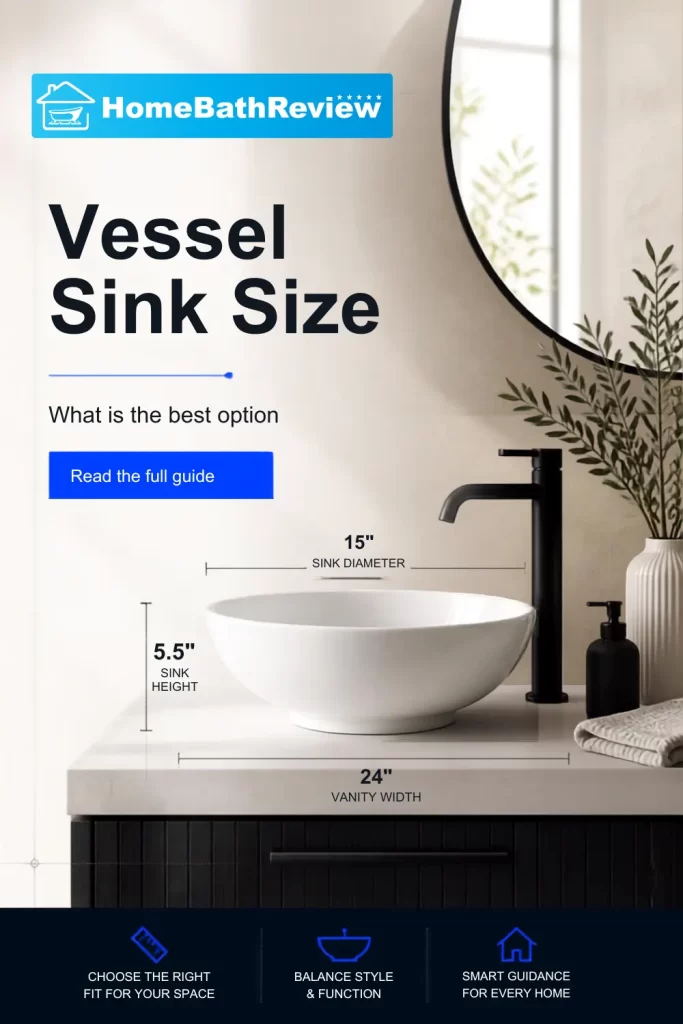
What Size Vessel Sink Is Best for a 24-Inch Vanity?
A 12- to 16-inch vessel sink is usually a good starting point for a 24-inch vanity.
Choose a shallower basin if the vanity has limited front-to-back depth. A round or compact oval design can help preserve countertop space.
What Size Vessel Sink Is Best for a 30-Inch Vanity?
A 16- to 18-inch vessel sink can work well on a 30-inch vanity.
This provides a useful basin without taking up the entire countertop. Make sure the sink’s depth leaves sufficient space at the front and back of the vanity.
What Size Vessel Sink Is Best for a 36-Inch Vanity?
A 17- to 20-inch vessel sink is generally a good match for a 36-inch vanity.
You can choose a larger basin if you have enough countertop depth and don’t need extensive counter space.
Vessel Sink Size vs. Bathroom Size
The size of your bathroom doesn’t necessarily determine the size of your sink. Instead, consider the available vanity and countertop space.
For example, a large bathroom with a small vanity may still require a compact vessel sink. Conversely, a small powder room with a relatively wide vanity may accommodate a larger basin.
The goal is to maintain a comfortable proportion between the sink, vanity, and surrounding space.
Common Vessel Sink Buying Mistakes
Choosing a Sink That Is Too Large
An oversized sink can leave little room for toiletries and make a vanity feel crowded.
Ignoring Sink Height
A tall vessel sink can make the finished rim height uncomfortable if the vanity is already tall.
Forgetting Faucet Compatibility
Not every bathroom faucet works well with a vessel sink. Check the faucet’s height and reach before purchasing.
Measuring Only the Width
Depth and height are equally important. A sink can fit the vanity’s width while still being too deep or tall.
Not Checking Drain Compatibility
Make sure the sink’s drain opening is compatible with the drain assembly you plan to use.
Final Verdict: What Is the Best Vessel Sink Size?
For most bathrooms, a 16- to 20-inch vessel sink offers the best combination of functionality, appearance, and countertop space.
Smaller 12- to 16-inch models are ideal for compact bathrooms and powder rooms, while 20-inch-plus sinks work best with larger vanities.
Before buying, measure the vanity width and depth, consider the sink’s height, and plan the faucet placement.
The right vessel sink should provide enough washing space without overwhelming the countertop.
For most homeowners, a 16- to 18-inch vessel sink is a safe all-around choice, while smaller or larger options can be selected based on the available space and desired bathroom style.
Frequently Asked Questions
How big should my vessel sink be?
Your vessel sink should be proportional to your countertop, typically 16-20 inches in diameter for round sinks or similar for rectangular ones, ensuring enough space for functionality and style.
What is the best faucet height for a vessel sink?
The best faucet height for a vessel sink is typically 6–12 inches above the rim of the sink, depending on the sink’s height, to provide adequate clearance and prevent splashing.
Do vessel sinks break easily?
Vessel sinks can break more easily than traditional sinks if made from fragile materials like glass or porcelain, but durable options like stone or metal are more resistant to damage.